
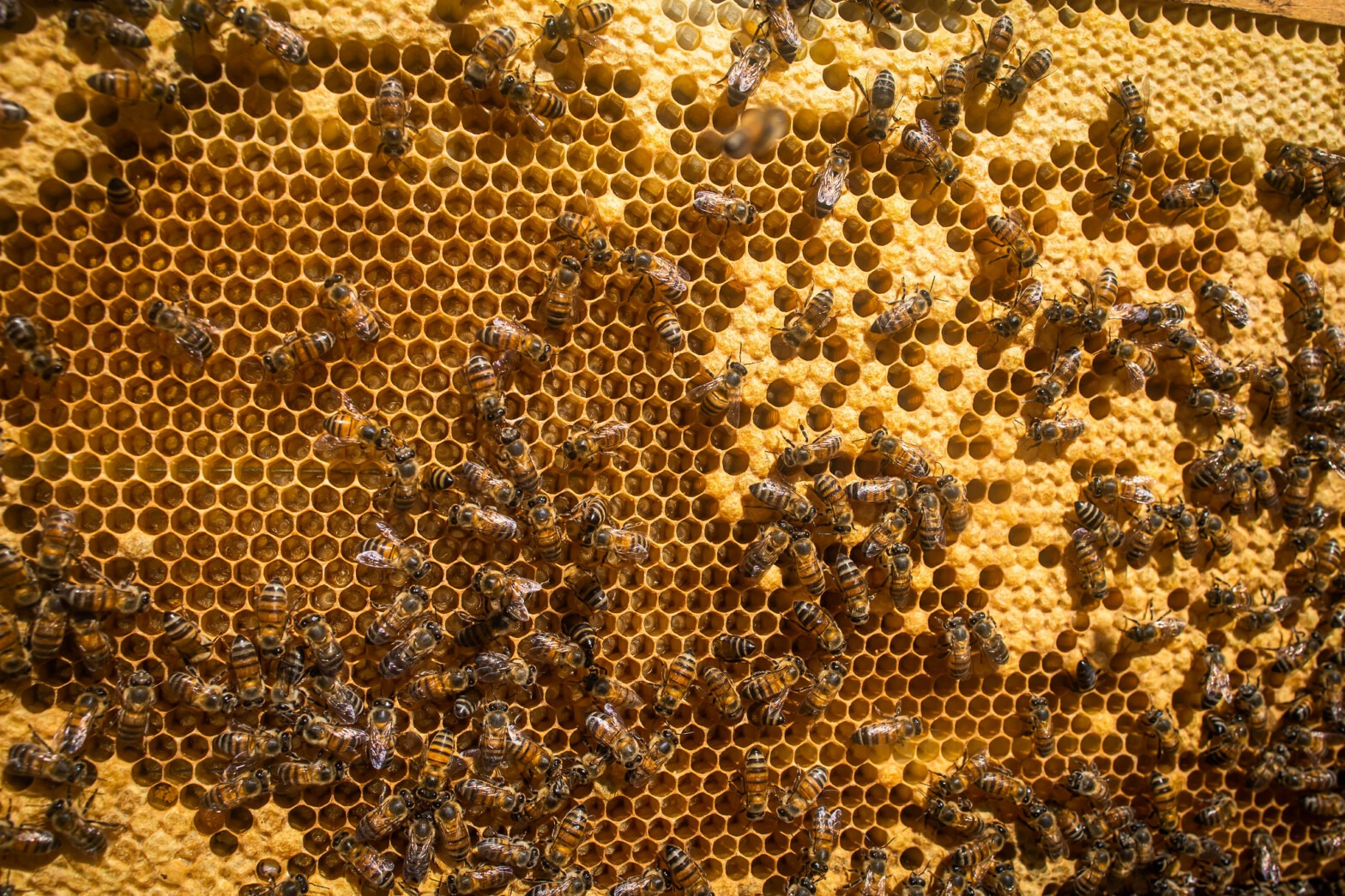
Beeswax is made from beeswax secreted by worker bees, which is then refined available in slabs.
Physical Properties: Solid at room temperature. Crude beeswax is pale yellow or yellow, while bleached beeswax is white. It’s a lustrous, soft, and pliable material. Insoluble in water, it is soluble in organic solvents such as diethyl ether and chloroform. It exhibits a degree of plasticity and lubricity.
Features
1. Physical Properties: Solid at room temperature. Crude beeswax is pale yellow or yellow, while bleached beeswax is white. It’s a lustrous, soft, and pliable material. Insoluble in water, it is soluble in organic solvents such as diethyl ether and chloroform. It exhibits a degree of plasticity and lubricity.
2. Chemical Properties: Primarily composed of fatty acids, fatty alcohols, and hydrocarbons, giving it excellent chemical stability. It possesses good water resistance, electrical insulation properties, and antioxidant capabilities.
3. Biological Properties: Natural beeswax is non-toxic. It has moisturizing and protective effects on human skin and also exhibits some antibacterial and anti-inflammatory properties.
4. Odor and Taste: Possesses a distinctive beeswax aroma and a mild, subtly sweet taste.
5. Processability: Easily processed and formed. It can be melted by heating and then shaped into various forms as needed.
Applications
Beeswax has a wide range of applications, primarily in the following fields:
1. Food Processing: As a food additive, it functions as a coating agent, glazing agent, and component in food packaging.
2. Cosmetics Industry: Frequently used in the manufacture of lip balms, lipsticks, creams, and hand lotions. It enhances the product’s consistency, hardness, and luster while providing moisturizing and protective benefits to the skin.
3. Pharmaceutical Industry: Utilized in the production of sustained-release medications, suppositories, and pill coatings. It’s also employed in pharmaceutical packaging and sealing. Furthermore, beeswax plays a role in topical ointments within Traditional Chinese Medicine (TCM) practices, where it is valued for its anti-inflammatory and analgesic properties.
4. Candle Manufacturing: An essential raw material for candle production, providing a stable flame, reducing soot emissions, and imparting a distinctive aroma.
5. Leather Industry: Employed in leather care and conditioning, making leather supple, lustrous, and enhancing its water resistance and abrasion resistance.
6. Agriculture and Horticulture: Used for grafting fruit trees, acting as a grafting wax to improve graft survival rates. It can also be found in certain plant protection products, providing a protective effect.
BEES HONEY
Brazilian bee honey is a high-quality, export-driven product, with the country being a top global supplier known for its diverse, pesticide-free, and organic options. Production, often by small, sustainable producers, is carried out mostly to US market. It features both widely commercialized Africanized bee honey and highly prized medicinal honey from native stingless bees, such as Jataí.
KEY ASPECTS OF BRAZILIAN HONEY
- Diverse Varieties: Due to rich biodiversity, Brazil produces many types of honey, including floral, organic, and raw varieties.
- Native Stingless Bees: Brazil boasts the highest biodiversity of stingless bees, with over 300 species. These bees (e.g., Jataí, Mandaçaia) produce unique, highly medicinal, and often more acidic or citrusy honey, which is considered some of the most therapeutic in the world.
- Quality and Safety: Brazilian honey is recognized for its high purity and is frequently free from antibiotics and pesticides.
- Top Producers and Regions: The industry is supported by small to medium-sized producers (often <50 hives). Major exporting states include Piauí and Santa Catarina.
- Industry Growth: Export revenues increased by 76% in 2024, highlighting the growing global demand for Brazilian, particularly organic, honey.
Notable Types of Honey:
- Africanized Honeybee (Apis mellifera): The most common type, known for its sweet, versatile, and high-volume production.
- Jataí (Tetragonisca angustula): Famous for its medicinal, anti-inflammatory, and healing properties.
- Mandaçaia (Melipona quadrifasciata): Known for its woody, delicate, and watery texture.
- Canudo (Scaptotrigona depilis): Known for its anti-fungal and anti-inflammatory properties.
The Brazilian agricultural sector is increasingly using technology to guarantee the purity and origin of this honey, particularly for native species.
13 TYPES OF BRAZILIAN HONEY AND REASONS FOR WHY YOU SHOULD TASTE THEM
Brazil is a large enough country to host different biomes, climates, and temperatures. This factor alone could explain the diversity in the food we can produce. But when it comes to honey, there is more to find out.
As an organized form of honey extraction and production, beekeeping began in Brazil with the hives brought systematically by immigrants between the 19th and 20th centuries. It expanded from 1956 onwards, with the cross-breeding of European and African species, which resulted in the Africanized bee race Appis melifera.
This is the bee that provides the best-known jars of honey in the country. The variety of flavors, nuances, textures, and medicinal aspects comes from the different blossoms, the most common of which are those of eucalyptus, orange, cipó-uva, assa-peixe, and aroeira.
Eucalyptus: Relatively dark honey, rich in minerals, generally used as an expectorant. Produced mainly in the Brazilian South and Southeast regions.
Orange blossom: Clear honey, appealing for its typical aroma and its coloring. Mainly produced in São Paulo and Minas Gerais states.
Cipó-uva: Transparent honey, which usually pleases consumers for its color, aroma, and flowery taste. Mainly produced in the Cerrado biome areas in Minas Gerais.
Assa-peixe: Clear and translucent, it has a light flavor. Produced in the North, Southeast, and Midwest regions.
Aroeira: Dark honey, known for its medicinal aspects and popular in the Minas Gerais state.
Multi-floral: If honey does have a predominant bloom, we say that it is multi-floral, sold under the name “silvestre” (wild). In these cases, the honey has a greater richness of flavors and is more related to the plants that bloom in that specific region.
MORE BEES, MORE HONEY
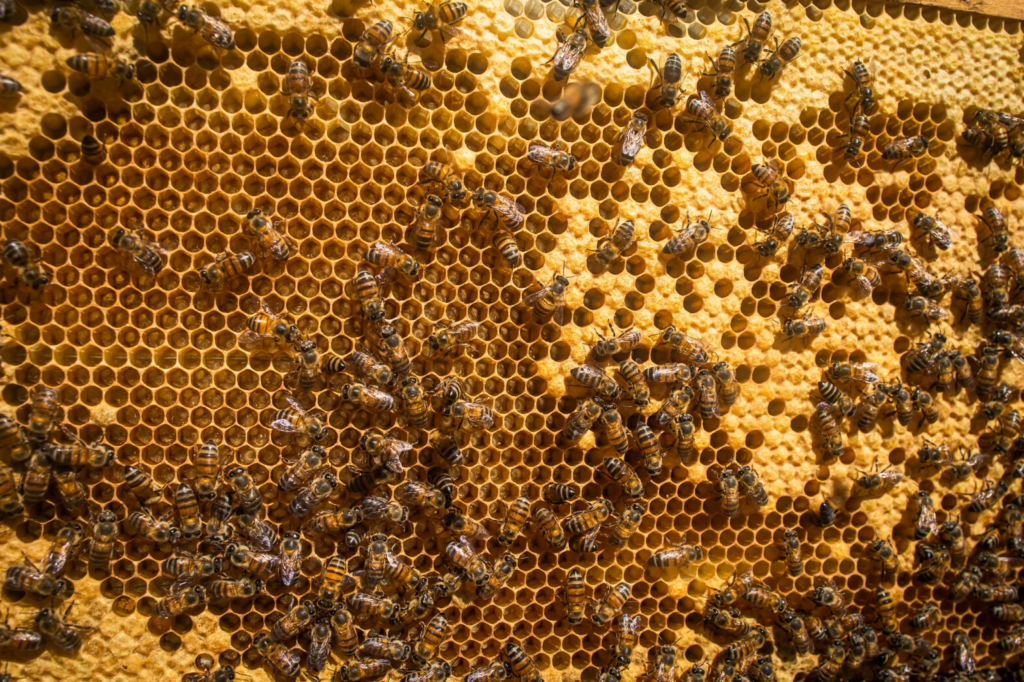
The diversity of Brazilian honey is not only in the flowers. Today, Brazil counts 250 species of stingless bees. And several of them produce marketable honey. Regarding these bees, the flowers do not influence the flavor of the final product. Check additional details:
Mandaçaia (Melipona quadrifasciata): Clear, sometimes transparent honey. It has a light taste with a citric touch. Produced mainly in the Brazilian South and Southeast regions.
Jataí (Tetragonisca angustula): Light and slightly acidic honey, with woody notes and fine texture. It is used in popular culture for its medicinal aspects. Produced all over Brazil.
Bugia (Melipona mondury): Light honey with a mild flavor and delicate floral aromas. Produced mainly in the South and Southeast regions.
Tiúba or Uruçu-cinzenta (Melipona fasciculata): Very sweet and usually transparent honey, with intense floral scents. Produced mainly in the Maranhão and Pará states.
Borá (Tetragona clavipes): A peculiar and sophisticated type of honey. It is deemed a delicacy for its slightly salty flavor, reminiscent of cheese. It is great to season salads and combines well with savory dishes and white meat, such as fish and chicken. Produced all over Brazil.
Tubuna (Scaptotrigona bipunctata): Honey with intense aromas and a sometimes bittersweet flavor. It is great to season sweet and sour salads and cheeses with intense flavors. Produced in the South and Southeast regions.
Mandaguari (Scaptotrigona depilis): A more viscous honey with a slight bitterness, its color may vary from almost transparent to dark amber. When crystallized it becomes a creamy paste with an incredible flavor. Produced mainly in the South and Southeast regions.
Brazilian honey exports
Brazilian beekeepers are predominantly small-sized producers — they have up to 50 hives. Small and medium Brazilian rural entrepreneurs are increasingly empowered to export their products, accounting for 60.2% of national production.
In 2020, Brazil produced a total volume of 51.5 tons of honey, with an estimated production worth R$ 115.5 million. In 2021, the revenue yield from honey exports increased 76% over the previous year, from US$ 98.5 million to US$ 163 million. In terms of volume, Brazil traded almost 47 thousand tons of honey, with a growth of 6%. The main export destination of honey was the United States, with about 70% of the whole volume traded. The Brazilian states that exported the most were Piauí and Santa Catarina.